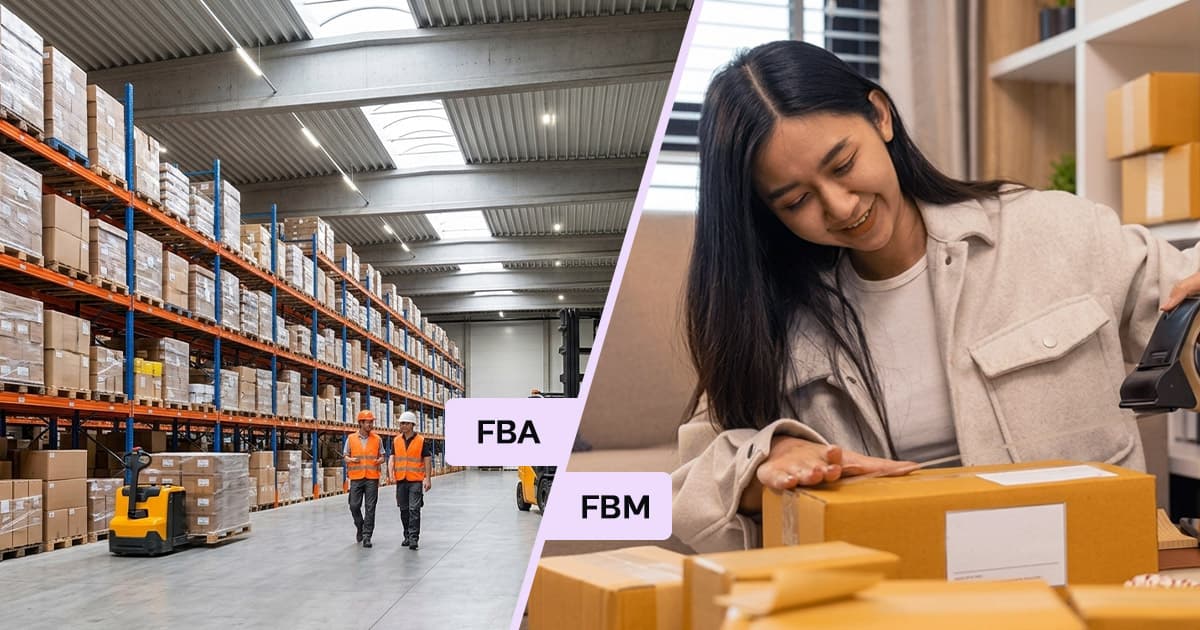
Amazon FBA vs FBM 2026: Which Fulfillment Model Wins?
A comprehensive 2026 guide comparing Amazon FBA vs FBM fulfillment models wins. Learn the key differences, cost breakdowns, shipping requirements, and how to choose the right fulfillment strategy for your brand.
Amazon FBA vs FBM | Key Differences
To thrive in the new e-commerce reality requires discipline around capital allocation, supply chain flexibility, and marketplace agility. Selecting between amazon fba vs fbm is the most important structural decision your brand will make when building your fulfillment infrastructure. This choice establishes your minimum operational margins, affects the speed at which you organically rank, and essentially shapes how your business engages with end consumers. The problem with fba vs fbm amazon workflows is not searching for a "best" method (that doesn't exist), based on some vague notion of goodness, but conducting a cold, hard audit of your catalog's physical dimensions, and looking within as to how capable your warehouse is to deliver the experience you're aiming for. This guide provides a detailed playbook that lays out the precise structural mechanics of (1) how each model works, as well as—crucially—(2) the rationale behind selecting the ideal distribution model to align with your corporation's portfolio.
Core Definitions: What is Amazon Fulfillment by Merchant?
The key to comparing your options is to strip away everything relating to how self-managed distribution interacts with the Amazon ecosystem. With amazon fulfillment by merchant (FBM) you have full, end-to-end control of the post-purchase lifecycle.
[ Order is Placed ] ──► In-house Warehouse Pack ──► Private Carrier Network ──► Direct Door Send
Rather than giving up your physical inventory to Amazon's giant, highly automated operating network, you do all the storage, pick-and-pack labor and parcel tracking yourself. This level of control needs a very rigorous approach, but it gives you the unparalleled flexibility that a platform-managed fulfillment could never have with bespoke packaging, unboxing experiences and instant quality checks.
A Deep Dive into the Pros and Cons of Selling with Amazon FBA vs FBM: Weighing the Trade-Offs
I've seen many businesses with a digital storefront make trade-offs on the fly in relation to their operations. A transparent assessment of amazon fba vs fbm pros cons gives you a better understanding of where your capital is most efficiently used.
Benefits of Fulfillment by Amazon (FBA)
With FBA, you remove friction from search results and instantly compete for the Prime badge by placing your offers in front of thousands, if not millions of high-intent, lower-funnel buyers who choose speed above all else. Amazon takes care of customer service and 24/7 returns processing with all the load on its shoulders. But this convenience comes at a heavy cost, pulling your cash flow into storage bills, long-term inventory payments and sudden policy changes that can yank your bottom line net profitability overnight. If you have any questions about Amazon FBA, eSellerWorld is here to help — our team manages end-to-end FBA operations so you can focus on growing your brand.
The Power of Fulfillment by Merchant (FBM)
Alternatively, keeping distribution in-house keeps your corporate coffers safe from unexpected platform fees. You acquire the ability to service orders for different storefronts from a single, unified inventory pool. But the obvious trade-off comes from organic exposure because FBM listings often have a tougher time securing top-of-search placements against competing FBA offers and your in-house team needs to execute like clockwork or else face severe penalties from the platform.
Core of Operational Dynamics: Difference between FBA vs. FBM
On the tactical level, difference between fba and fbm workflows boils down to who holds the data loop, space, and customer points of contact.
With FBA, once your freight gets to an Amazon fulfillment center, it is mainly hands-off when it comes to inventory management. Its automated algorithms dictate precisely which local warehouses your goods will be located in to meet local consumer demand. With the FBM model, you have 100% physical control of your assets and can adjust your inventory strategy in real-time without having to go through platform inbound processing queues.
The overarching objective while assessing this contrast is to map your pick to your product specs. For example, high-margin, fast-turning small goods naturally do great inside the highly automated velocity of FBA, while bulky, oversized, or low-margin goods are typically at their most profitable home under an in-house optimized distribution system.
Compliance and Standards: Ensure that you are following the amazon fbm shipping requirements
This means that if you decide to take the route of merchant-fulfilled, you cannot afford to run a loose, untethered warehouse operation. The platform has established stringent, non-negotiable amazon fbm shipping requirements that your operations must faithfully comply with day in and day out to protect the buyer experience:
Late Shipment Rate (LSR) under 4%: Your warehouse team needs to verify and ship customer orders, never missing your handling time window.
Valid Tracking Rate (VTR) > 95%: This number is a calculated rate of all parcels that are dispatched; they should use an authentic and integrated carrier network so buyers get real-time tracking clarity.
Pre-Fulfillment Cancel Rate less than 2.5%: At this point, you need your digital store catalog to perfectly reflect the products sitting on your warehouse shelves and able to be shipped out, avoiding customer cancellations due to items going out of stock shortly after they are ordered.
Your performance against these stringent compliance thresholds ultimately determines your route to market, as any failure hits you with expeditious buy-box declarative removals from leading professional customer-led vendors, or indeed the cessation of full account operations—operational discipline is not just an edge in running a successful merchant-fulfillment business: it is the basic pre-condition.
Fulfillment Performance Criterion | Fulfillment by Amazon (FBA) Network | Fulfillment by Merchant (FBM) Network |
|---|---|---|
Prime Badge Eligibility | Automatic and instantaneous | Earned via strict Seller Fulfilled Prime (SFP) vetting |
Inventory Storage Overhead | Variable cubic-foot platform fees; long-term penalties | Fixed in-house or third-party logistics (3PL) lease costs |
Returns & Support Ownership | Handled entirely by Amazon's internal support staff | Owned 100% by your brand's customer service team |
Strategic Answers & FAQ Breakdown
Go over the breakdown of operations we target for optimization using the 2026 distribution landscape.
Q1: amazon fba vs fbm which is better for new sellers?
Ans: Overall answer when it comes to new sellers deciding amazon fba vs fbm which is better for new sellers: FBA is your best bet for beginners that do not have logistics experience currently under their belt! By using FBA, you offload the complicated headaches of negotiating 3rd party shipping contracts and overseeing warehouse workers. This enables early-stage brands to put 100% of their attention into listing conversion logic, simple brand building, and capturing early product-market fit.
Q2: How a realistic fba vs fbm cost comparison 2026 should look like?
Ans: A proper fba vs fbm cost comparison 2026 needs to chart your actual product profile against current platform fee schedules. Performance Based Calculations: Reflection on FBA must integrate between picking and packing activities, order delivery fees based on weight and the seasonal spikes of storage solutions. In the case of FBM, your calculations need to reflect hidden costs in calculating how much it truly costs you in order square-foot-range for your in-house warehouse utilization as well as packing materials, labor hours and volume carrier rates to find the real tipping point (that yields margin).
Q3: How to audit amazon fba fees vs fbm fees breakdown?
Ans: An accurate amazon fba fees vs fbm fees breakdown must go deeper than mere surface level postage cost. Fulfillment fees, base storage costs and removal order fees (if removed) will be included in the ledger of FBA costs. Your FBM cost ledger, on the other hand, needs to account for your direct overhead, pick and pack labor costs, and returns processing costs. The one that minimizes total per-unit distribution costs (within your delivery speed target) wins your capital allocation. Fill out our free Amazon audit form to get an easy, no-cost FBA report tailored to your account.
Q4: when to switch from fba to fbm amazon?
Ans: When you make the transition from fba to fbm amazon of course depends a lot on your inventory velocity and storage footprint. If the monthly sales velocity of a specific ASIN is slowing down, or if the physical size of that product results in high storage penalties and reams down your margins — then you need to know when to switch from fba to fbm amazon and switch it over to FBM. By bringing in-house your slow-moving or bulky goods within your home network, you will be able to plug the capital drain of your account spend.
Q5: can you do both fba and fbm on amazon?
Ans: Yes, absolutely. If you want to know can you do both fba and fbm on amazon—the answer is an unequivocal yes: deploying both methods, in a hybrid sort of way, is often the most resilient strategy that an enterprise can undertake. By creating two unique fulfillment SKUs for the same product listing, you can utilize FBA as your main driver for peak season Prime sales, and have a merchant-fulfilled SKU that is a contingency plan asset to protect your buy-box position against an unanticipated platform inventory shortage.
Wrap up: Drawing out the Sustainability Development Horizon
Choosing your marketplace fulfillment structure is one of the most fundamental business decisions you'll make. By applying this full-fledged strategic framework, you avoid costly logistical failures and wasted operational capital on solving foggy problems with blind solutions.
Whether you lean into the automation scale of Fulfillment by Amazon, build internal discipline around Fulfillment by Merchant, or run a hybrid FBA/FBM strategy — let your decision be driven by cold hard data, margin safety, and unambiguous compliance guidelines. A true data-first approach to your distribution model ensures your enterprise maximizes total sales volume while protecting bottom-line profit margins over the long haul.
🎯 Not Sure Which Fulfillment Model Is Right for Your Catalog?
Get a Free Amazon Account Audit from eSellerWorld
Our experts will review your product catalog, fee structure, and fulfillment performance to show you exactly where FBA, FBM, or a hybrid model can save you money and protect your margins — completely free, no commitment.
✅ What you get:
FBA vs FBM cost breakdown for your actual SKUs
Storage fee and long-term penalty risk review
Fulfillment compliance health check (LSR, VTR, cancellation rate)
Hybrid strategy recommendations to protect your buy box
👉 Claim Your Free Amazon Audit Now →
Takes less than 2 minutes to request. Results delivered within 48 hours.

Vishal Barot
vishal@esellerworld.com
Vishal Barot is an Amazon marketplace expert specializing in high-converting product listings, content strategy, and growth-driven ideas. With deep knowledge of Amazon SEO, buyer psychology, and platform policies, he helps brands create optimized listings that improve visibility, boost conversions, and drive sustainable sales.