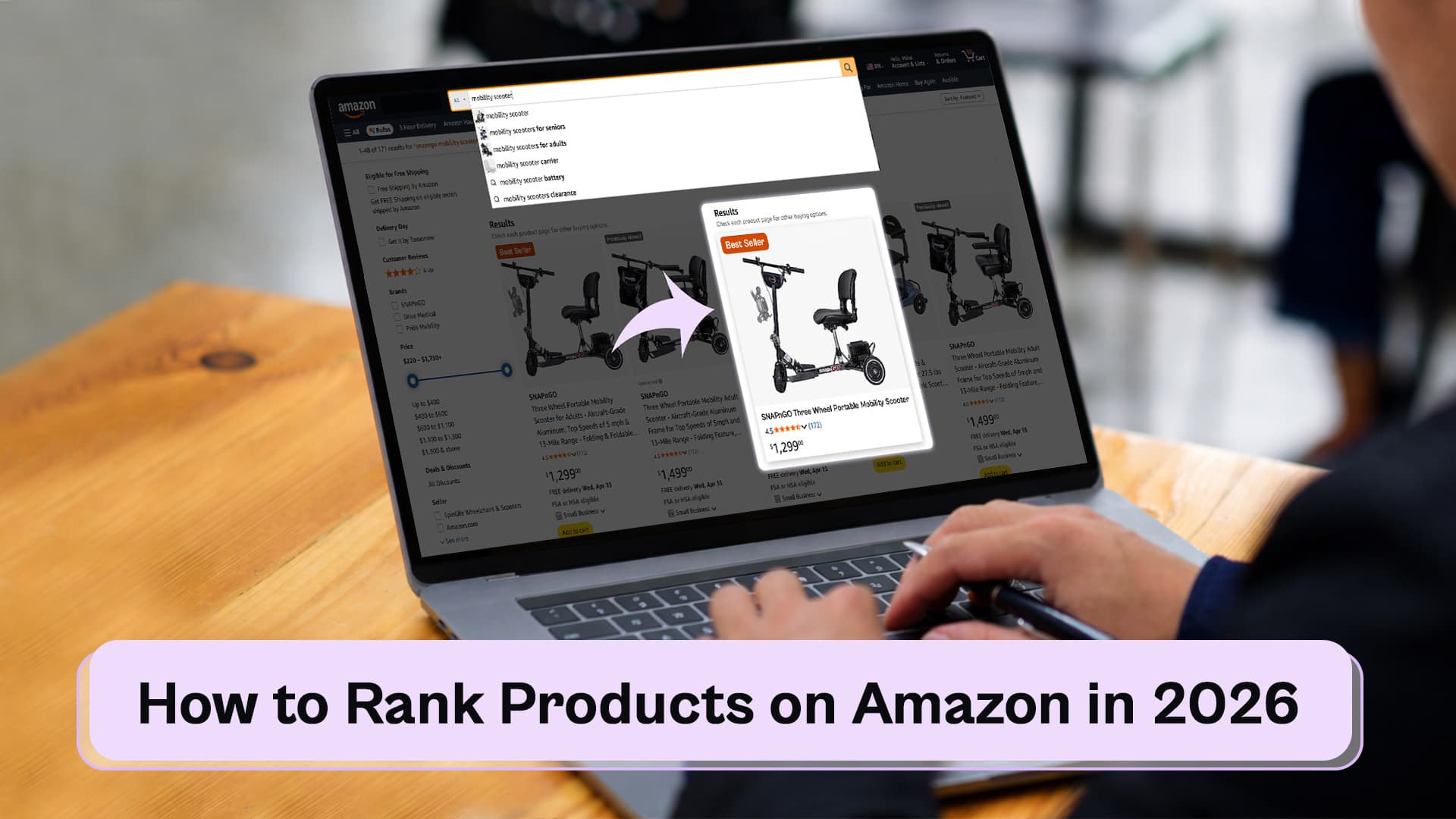
How to Rank Products on Amazon in 2026
Want to rank your products on Amazon in 2026? This guide breaks down everything you need—from smart keyword research and optimized listings to A+ content, reviews, and conversion strategies. Learn how Amazon’s latest algorithm works and how to boost visibility, increase clicks, and drive more sales with proven SEO techniques.
How to Rank Products on Amazon in 2026? | Your Complete Guide for SEO on Amazon
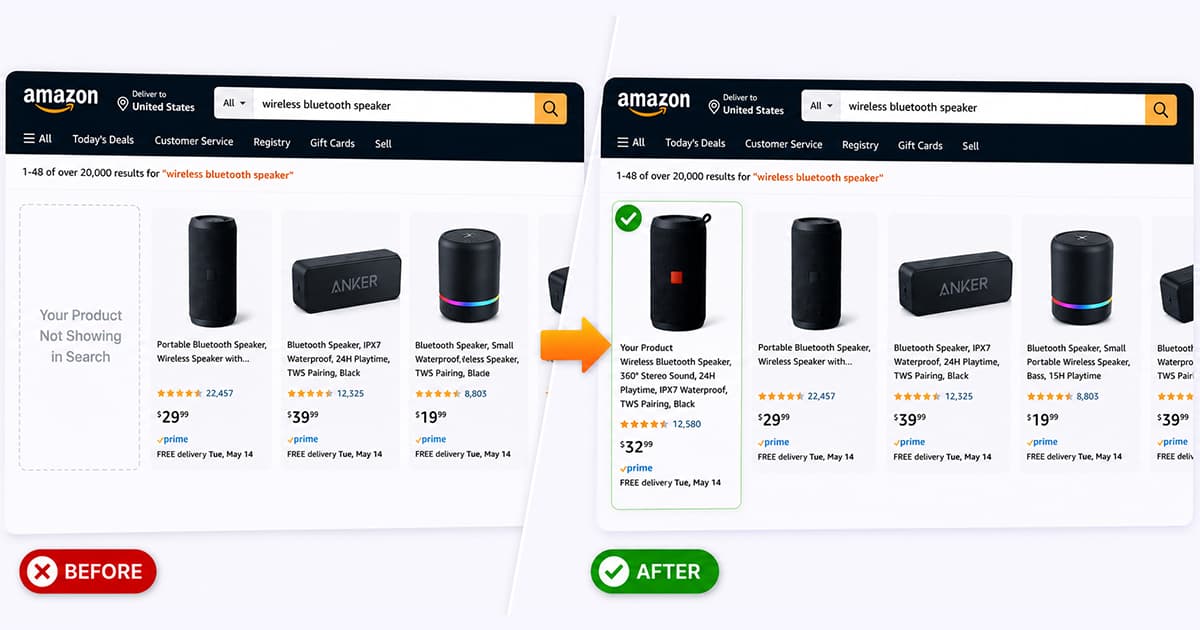
If you are an Amazon seller, then you understand the frustration behind the question: “How to rank products on Amazon and increase Amazon sales?" It can be really daunting to get noticed, given there are so many issues nowadays, like low number of sales, high ACOS (Advertising Cost of Sale), and poor sell-through rate (STR). With so many sellers competing for the same customers, distinguishing yourself is not an easy task, particularly when there are millions of sellers offering the same products.
However, do not be discouraged! In 2026, it's not impossible to get your products ranked on Amazon. The largest e-commerce site in the world is constantly updating their search algorithm and has recently introduced Amazon SEO optimization that favours sellers who have learned and understand how the Amazon ranking algorithm works. With the right procedures and techniques, you can increase your sales and rankings on Amazon and drive more traffic to your listings without relying heavily on paid advertising.
This guide will cover what factors contribute to Amazon search ranking, provide step-by-step techniques for doing SEO for Amazon, and provide you with the knowledge needed to properly optimise your product listings to achieve the maximum amount of exposure in the ultra-competitive Amazon selling environment.
How Amazon Ranking Works in 2026: Key Factors To Improve Your Product Ranking
In 2026, there will be new variables that will play a role in determining how well you rank on Amazon. Amazon wants you to be visible to customers, so they created a ranking system that displays the most relevant, likely-to-convert products. To get high rankings in the Amazon algorithm, it's important to abide by the following ranking factors:
1. Click-Through Rate (CTR): A CTR measures how often someone clicks on your product once it has appeared in a search result. The more people that click on your product after seeing it on the search results page, the more likely Amazon is to think that your product is relevant to the user.
2. Conversion Rate: This is the number of people who clicked on your product and completed a purchase. The higher the conversion rate for your product, the more likely Amazon will favour you because the product meets the needs of its customer base.
3. Sales Velocity: Fast-moving products will continue to be ranked higher. The more your product moves off the shelf, the higher your ranking on Amazon will be.
4. Keyword Relevance: The more accurate your keywords are in relation to a user’s search query, the more relevant your product will be to a user. Therefore, placing keywords in the title, bullet points, and the backend search term section is a part of effective Amazon SEO optimization, and will improve your ranking.
Expert Tip: If you want to improve your Amazon listing but don’t know how, consider hiring someone who specializes in Amazon listing optimization services. This will help you structure your listing correctly so that it receives the highest ranking possible from Amazon based on appropriate keywords and will produce the greatest number of sales.
A Comparison of A9 Versus A10: Amazon's Changing Algorithm
The Amazon algorithm for rankings has been constantly improving since first coming out with the A9 algorithm in 2003 and more recently moving to the A10 (an unofficial term) system. The A10 system reflects a number of major updates to how an item may be ranked since the beginning of 2020 concerning customer engagement and seller credibility/organic sales versus simply trying to fit in as many keywords as possible.
A9 (The Old Aglo)
The A9 algorithm was primarily focused on keyword relevance. As a seller, you would need to use the correct keywords in your product listing in order to rank. The A9 method had no way of measuring how well your item would perform with customer reviews; therefore, it wasn't able to determine true product success.
A10 (The New Era)
The new version of A10 reflects a refined approach to Amazon SEO, utilizing a much more holistic consideration of all aspects of performance on Amazon to rank products. Below, you will find a brief description of some of the major ranking components under the new A10 algorithm.
Consumer Reviews and Ratings: Consumer feedback is incredibly important when it comes to improving your rankings on Amazon by way of positive feedback from customers. The more positive reviews that you have, the more likely it will be that your product will rank higher.
Sales Performance: Consistent and fast sales of an item show Amazon that there is demand for the product and help to create sales velocity, which is now a key driver of ranking position.
Conversion and Repeat Purchases: The A10 algorithm analyses not only your conversion rates, but also how many repeat purchases your product has, to help indicate consumer satisfaction. In general, the better your product performs relative to both of these criteria, the better your ranking will be.
External Traffic: In a shift from the A9 algorithm, the A10 algorithm considers external traffic. Sending visitors to your listing from Google Ads, social media sites or via an influencer will produce a positive ranking impact.
To summarise, the A10 ranking model marks a movement away from simply considering keyword optimisation, to a broader approach where products are rewarded for overall performance on Amazon, customer satisfaction, and generating external traffic. A good Amazon ads management strategy would also help generate better external traffic, which would enhance the overall product visibility and drive more sales in turn.
Keyword Research Strategy: How to Find and Use the Best Keywords for Amazon Product SEO 2026
Keyword research is key to the ranking of your products on Amazon. It’s not about just finding any keywords, but finding the correct keyword that matches the searcher’s intent as well as your product. Here’s how you will approach keyword research for Amazon product SEO in 2026:
Main/Primary Keywords: These are your high-volume terms (i.e., “best coffee maker”) and must be placed in key places such as your product title.
Long-Tail Keywords: These are very specific phrases (i.e., “best coffee maker for small kitchen" or “best coffee maker with grinder”) that are likely to be searched with lower competition.
Backend Keywords: These are the keywords you will enter in your backend search terms field. While these keywords are not shown on your listing, they will help Amazon understand your product.
Expert Tip: Tools such as Helium 10, JungleScout, and MerchantWords can help you discover high-volume keywords to use with minimal competition. A good combination of these keywords while creating your SEO Amazon listing strategy will give you a major boost in rankings.
Listing Optimization
Enhancing your Amazon listing creates better exposure for your product and higher conversion rates. Pay special attention to the following areas of your Amazon listing:
Sales Title: Include the major keyword for your product and be descriptive, yet crisp and clear about what your product is, its features, and its benefits in the sales title.
Bullet Points: Write the features and benefits of your product in bullet point format that is clear and compelling. Also naturally include other keywords to help improve visibility.
Description and A+ Content: Write the description to show additional detail to aid customers in their buying decisions. Add rich media through A+ content (Enhanced Brand Content) to further enhance your listing. This can include HD images, videos, and product comparison charts.
Expert Tip: If you want to use this feature but don’t know where to start, consider taking professional help. An efficient Amazon A+ content services provider can help create the best content that showcases your product’s key advantages.
The Importance of Product Images in Amazon SEO
In addition to optimizing your text, product images play an integral part in the overall ranking of your products within Amazon. According to Amazon, conversion rates are their primary focus by 2026, and offering quality images that can drastically increase your conversion rate will directly affect your rank.
Ensure your main image is of good quality, has no clarity issues and gives potential buyers an accurate representation of how they can benefit from purchasing your product. To enhance the appeal of your product, use lifestyle images and/or infographics as an additional means of marketing and demonstrating the value of the purchase.
Customer Feedback and Building Relationships
Amazon reviews are important for Amazon SEO, so if your product has recent, positive reviews it will rank higher than competitors that do not have as many reviews. Since a good review can help or hinder a sale, these are some ethical ways that to build a strong review profile.
Requesting Feedback: You can request feedback from your customers in a friendly, non-intrusive manner. Do not offer any financial incentive; simply remind them that their feedback is needed and is valued.
Dealing with Negative Reviews: Everyone will have some negative reviews, but how you choose to respond will be the most important part. Be respectful of your customers’ concerns and willingness to assist them with a solution if they so desire. Your customers will appreciate this in the long term, helping your brand grow organically.
Sales Velocity Strategy: Offering discounts to increase sales
Sales velocity is an important factor for Amazon SEO when determining product rank. The higher the sales volume of your product, the better the ranking. To increase sales velocity, implement one or more of the following strategies:
Offer discounts or other promotions so your products generate immediate sales.
Use limited-time or flash sales to compel customers to purchase.
The above strategies will help generate initial sales that will be considered by the Amazon algorithm and ultimately improve your product's ranking over time.
Amazon PPC Strategy: Increasing Product Visibility with Ads
Even though it’s important to rank on Amazon based on organic sales, Amazon PPC (Pay-Per-Click) allows you to rank higher for products by paying for advertising on Amazon. You can create targeted campaigns that maximize your return on investment by using high-volume, high-converting keywords to drive targeted traffic to your listings. Additionally, you can improve sales velocity by pulling traffic to your sales listing with PPC ads which, in turn, can lead to improved rankings based on organic sales.
Using External Traffic to Boost Your Amazon Product Ranking Including Google Ads, Social Media & Influencers
There are three primary ways to drive external traffic to your Amazon listing that can greatly enhance your Amazon product ranking: Using Google Ads, Social Media & Influencers.
When you use Google Ads to drive visitors with high intent to purchase from your product detail page, you are providing Amazon with valuable data that your product has been viewed by potential customers.
When you work with influencers who can influence their audience to visit and ultimately purchase your product from Amazon, you are providing Amazon with valuable data that your product has been purchased by influencers.
When you use social media to generate interest in your product, you provide Amazon with valuable data that your products have been viewed and purchased on social media.
Typical Errors to Think About When Setting Up SEO on Amazon
Here are some typical errors during Amazon listing optimization to avoid:
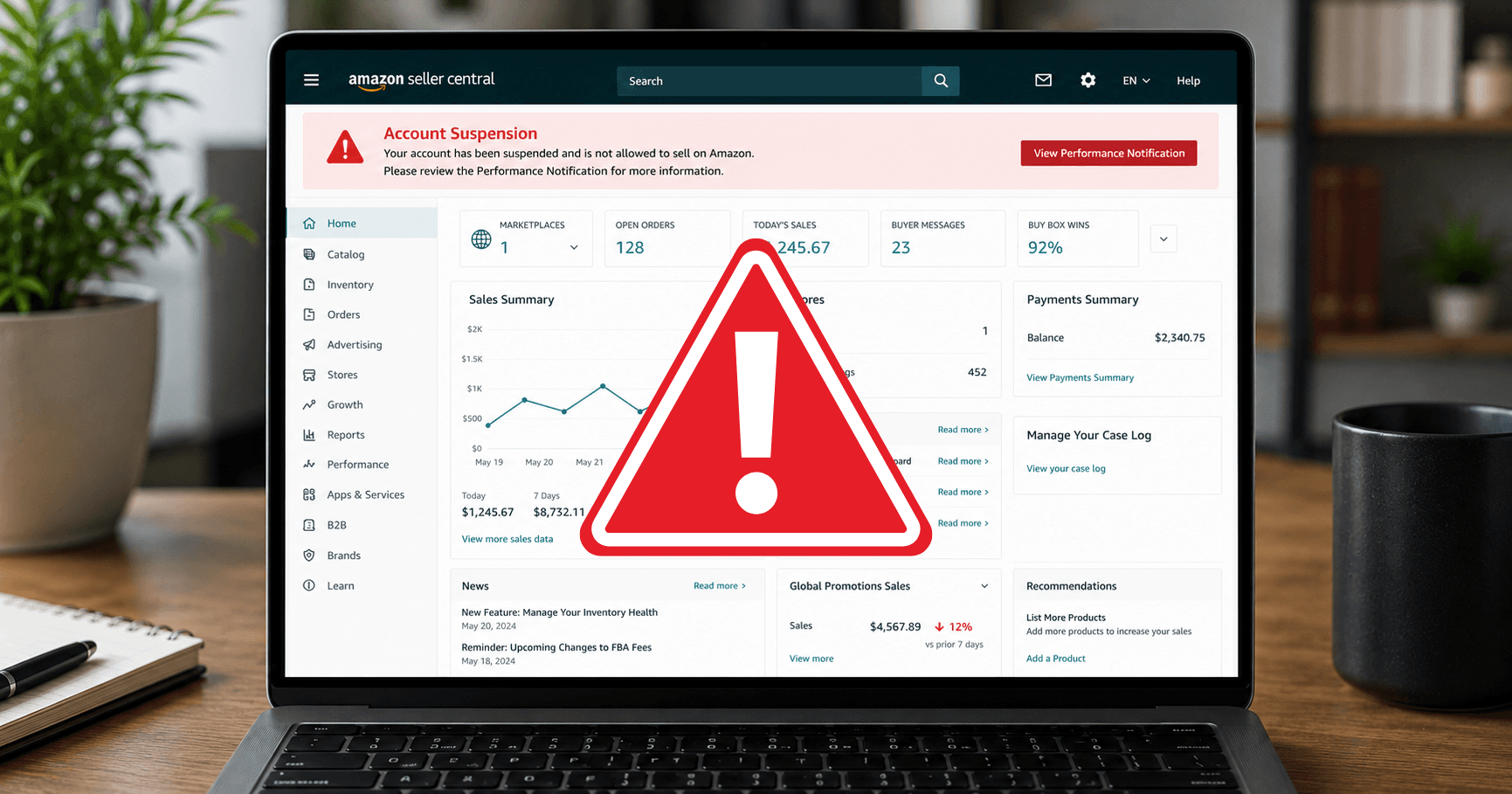
Don’t use an excessive amount of keywords in the title, bullet points, and description of your product or service. High density keyword stuffing not only makes for an unreadable product or service description, but also violates Amazon procedures.
Don't be foolish to ignore reviews. Reviews are a significant factor to help you rank properly.
Don’t ignore to use A+ content. It is a highly useful tool to use if it is available to you on your product/service page and can help distinguish you from other sellers.
Amazon SEO Pro Tips for 2026
Here are some pro tips to improve your Amazon SEO, which will naturally help increase Amazon sales for your products:
Regularly Test Your Listings: Utilize A/B testing on your titles, bullet points and images to determine the most effective options.
Emphasize Customer Satisfaction: Low return rates and positive reviews help demonstrate that your product is worthy of ranking by Amazon. Amazon SEO Checklist for 2026.
Efficient Keyword Research: Research your product’s keywords thoroughly. Include relevant keywords in the title and bullet points of your product listing, as well as in the search back-end of your product listing.
Amazon A+ Content: Use high-quality images of your product; use Amazon’s A+ (Enhanced) Content option where appropriate.
Gather Reviews: Encourage reviews in an Amazon compliant manner.
Focus on Sales Velocity: Increase sales velocity (rate at which products are sold) through the use of discounts and promotions.
Amazon PPC Advertising: Use Amazon PPC and bid on relevant keywords to increase your chances of getting additional sales from your PPC clicks.
Final Thoughts
Do you have difficulty figuring out the Amazon product SEO 2026 and want to know how to rank products on Amazon? Don’t worry, just contact us today for a free Amazon account audit. Let our team of experts assist you in optimizing your product listings, enhancing your Amazon SEO, and increasing your product’s sales velocity. Schedule a free call with us, and we will assist you in getting a higher ranking on Amazon in 2026!

Vishal Barot
vishal@esellerworld.com
Vishal Barot is an Amazon marketplace expert specializing in high-converting product listings, content strategy, and growth-driven ideas. With deep knowledge of Amazon SEO, buyer psychology, and platform policies, he helps brands create optimized listings that improve visibility, boost conversions, and drive sustainable sales.